
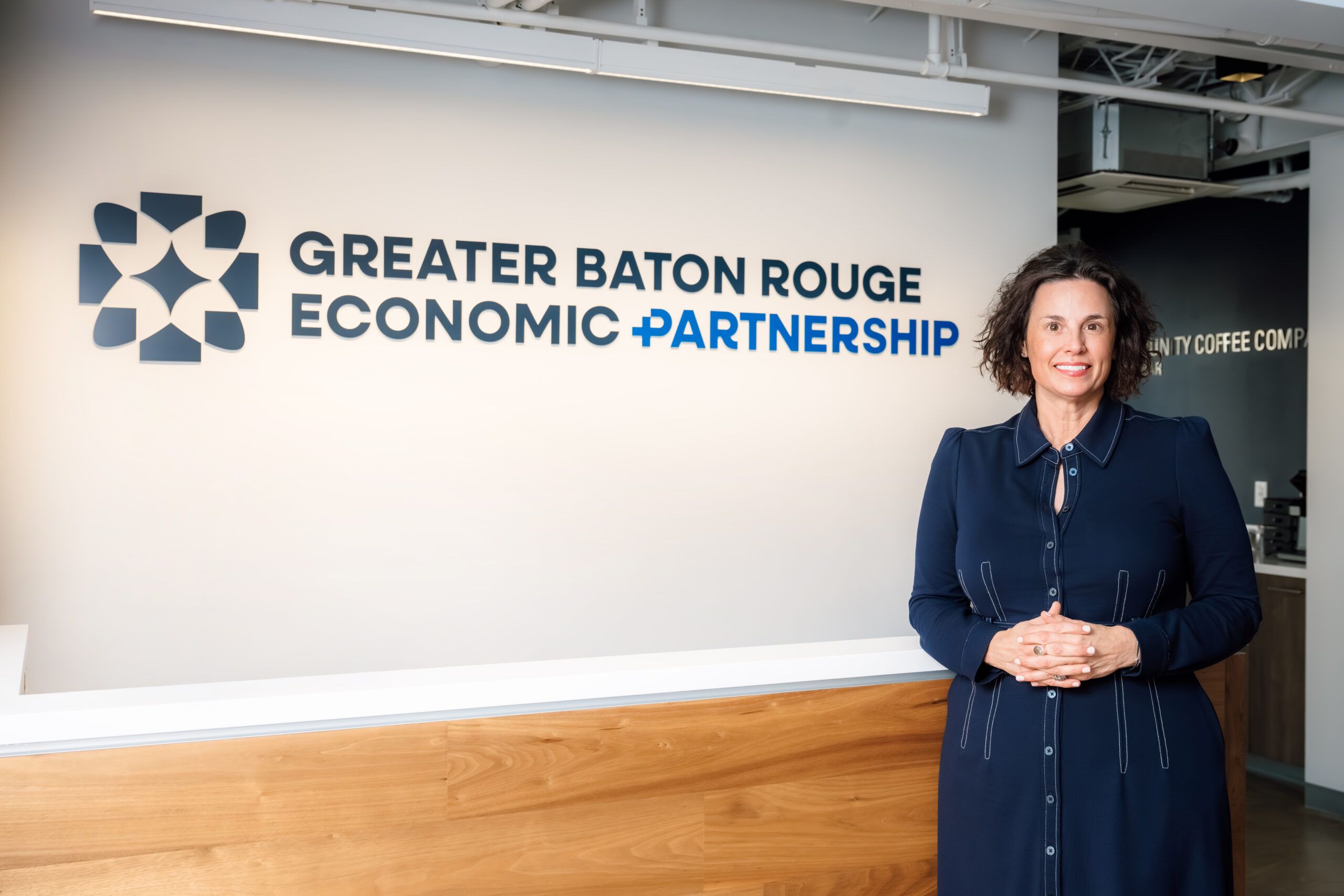
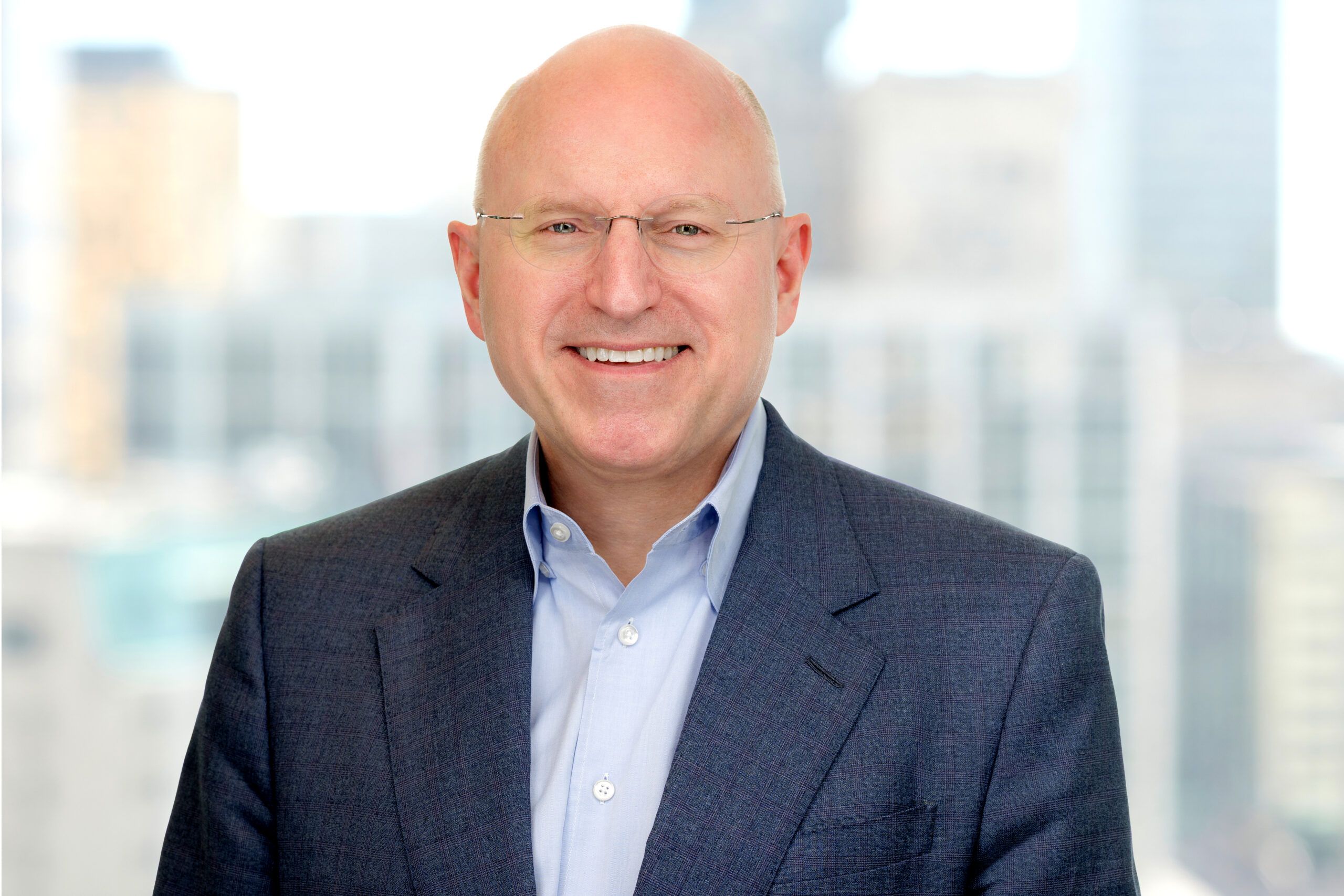
Lori Melancon, president and CEO,
Greater Baton Rouge Economic Partnership (Photo by Jordan Helfer)
On an October evening inside Elite Training Academy on Burbank Drive, the Baton Rouge Area Chamber publicly stepped away from the name it had carried for decades. In front of hundreds of business and civic leaders gathered to celebrate its 20th anniversary as a regional economic development organization, BRAC introduced its new identity: the Greater Baton Rouge Economic Partnership.
The change, according to President and CEO Lori Melancon, is the culmination of a shift that has been underway for years. As she describes it, the “chamber” label no longer matched the scope of the organization’s work or how it engages with national and international audiences.
“We get tripped up a little bit with the ‘chamber’ moniker,” she says. “It doesn’t necessarily communicate what we do outside of the market, nationally and especially internationally.”
While the name is new, Melancon insists the work is not. Since its transformation in 2005 into a regional economic development organization—commonly referred to as an EDO—the chamber-turned-partnership has tracked more than 220 project wins, $45 billion in capital investment and $1 billion in annual payroll across nine parishes. In her view, the new identity clarifies the mission rather than redirects it.
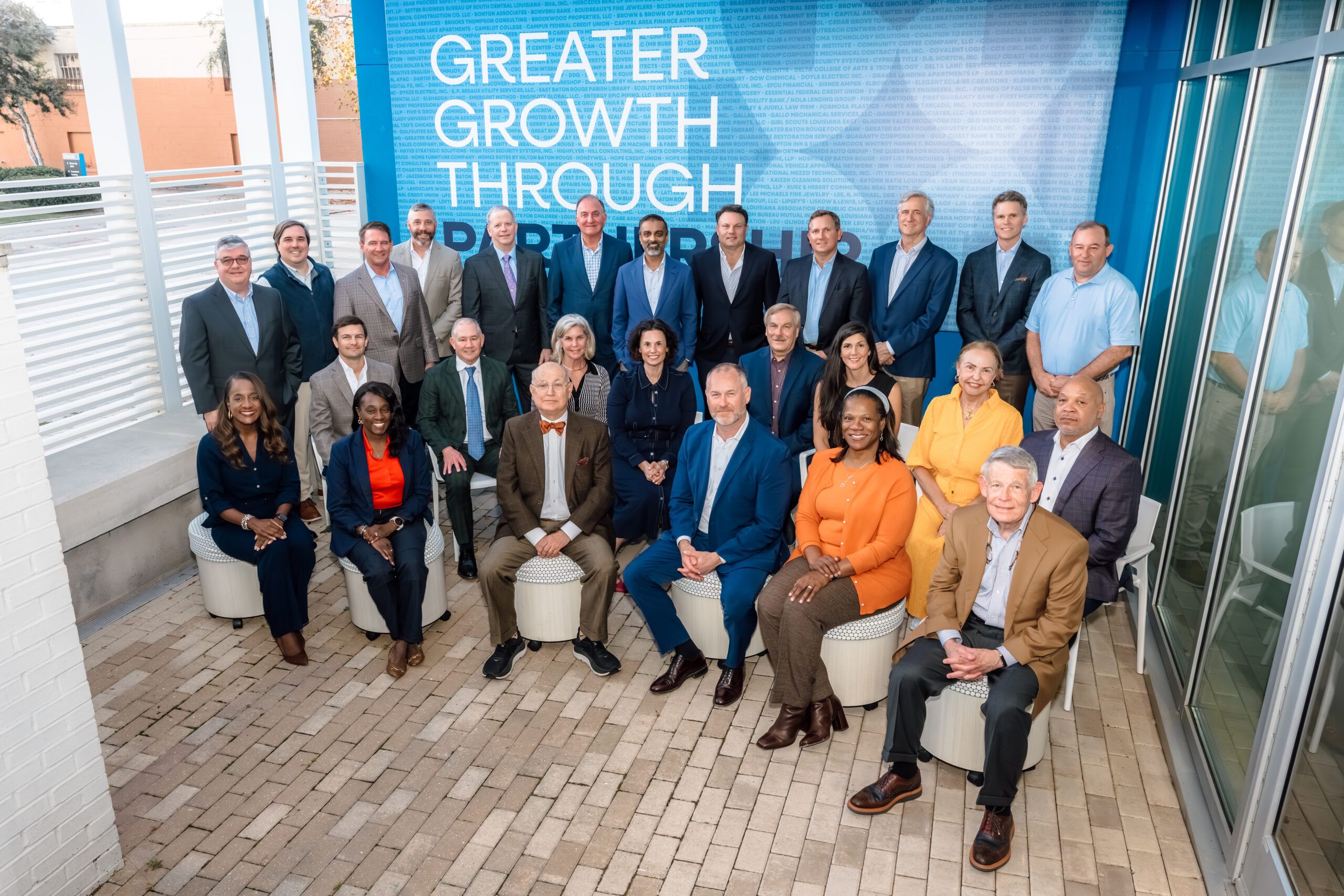
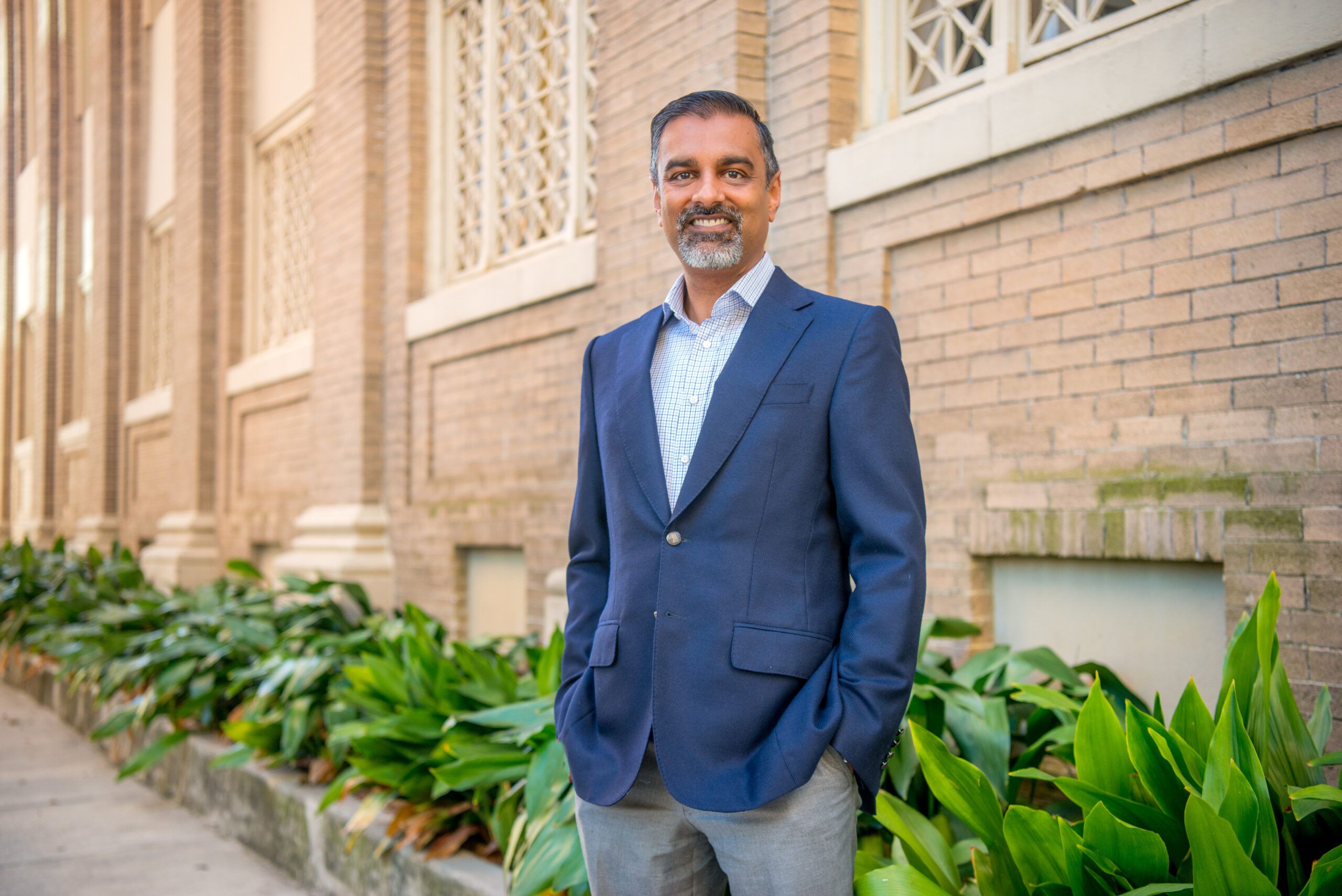
Board chair and Cornerstone Government Affairs principal Nial Patel describes the new moniker as an effort to sharpen the organization’s focus.
“In the past, we were doing a little bit of everything and we had a lot of successes,” he says, “but I think some folks on the board wanted to just double down on what we’re chartered to do, which is bringing in jobs and growing our economy across all of our parishes.”
The announcement also reopens long-standing questions about what it means for the region to operate cohesively—and about how the organization intends to define success going forward, particularly as it confronts new economic, political and workforce challenges.
FROM CHAMBER TO CATALYST
To understand the organization’s new direction, it helps to revisit how it arrived here.
When Stephen Moret took over in 2004, the Chamber of Greater Baton Rouge still functioned primarily as a traditional chamber of commerce. The notion that it could become the region’s primary economic development driver was far from guaranteed.
READ MORE
How two Baton Rouge business leaders found support through the Partnership
The push for change came not from inside the organization but from the local business community itself. Moret recalls that a 2003 benchmarking trip to Austin, Texas, was pivotal.
“Baton Rouge and Austin had been in a fairly similar place in 1970, as each had the state capital and the flagship research university, and each was of similar size,” he says. “But Austin far outgrew Baton Rouge in the next few decades. Many business leaders were deeply motivated to chart a more ambitious course for the region.”
Comparisons with Nashville, Tennessee, and Raleigh, North Carolina, reinforced that Baton Rouge lacked a robust regional EDO—something the other metros had invested in years earlier.
“We recognized that one of the key reasons the Baton Rouge area had underperformed other metros was that the business community and local governments had not invested in a robust regional economic development organization, as each of those other places had done,” Moret says.

The result was the Campaign for a Greater Baton Rouge, a five-year, privately funded effort that raised more than $15 million—triple its goal—to kick-start a regional strategy. Then, only months after that campaign was launched, Hurricane Katrina dramatically reshaped the region’s economic landscape, swelling Baton Rouge’s population and thrusting the chamber into a role that demanded immediate coordination with state and local partners.
“[Katrina] represented an inflection point in the history of the Baton Rouge area,” Moret says.
As part of its new direction, the organization expanded into a nine-parish model focused on business recruitment, public policy and workforce development. That new structure did not come without friction.
“Most were strongly opposed to the prospect,” Moret says of the outlying parishes’ initial reaction to the chamber serving as the regional EDO. The organization responded by adding parish representation to its board and emphasizing collaboration over control—an approach that remains foundational today.
“By the time I left BRAC in 2008, the nine-parish partnership we built through hard-fought outreach to local business leaders and EDOs across the Capital Region was the strongest it had ever been,” Moret says.
THE PARTNERSHIP IN ACTION
Two decades later, the regional model continues to shape how projects move through the Capital Region’s economic development pipeline.
Anna Johnson, executive director of the West Baton Rouge Chamber of Commerce, says the Partnership has emerged as an essential resource for smaller, parish-level chambers and EDOs that don’t always have the capacity to manage large-scale recruitment efforts.
Much of West Baton Rouge’s industrial base rests along the Mississippi River, where complex incentive and regulatory needs often arise.
“West Baton Rouge has a lot of industrial businesses because we’re along that petrochemical corridor on the Mississippi River, but we don’t always have the resources or even the information that we need to help those businesses with incentives or broader statewide initiatives,” Johnson says. “That’s where our regional EDO comes in to help us.”
That cross-parish collaboration was on full display earlier this year, when South Korea’s SNT Motiv and SNT Energy—the parent companies of SNT Global—announced a $59.4 million joint venture to establish their first U.S. consolidated manufacturing facility in West Baton Rouge. Johnson says SNT’s inquiry first reached Louisiana Economic Development, which then forwarded the lead to the Partnership. From there, the Partnership and the West Baton Rouge Chamber worked together to discuss the local business climate with SNT and assemble the incentive information needed to advance the project.
The Partnership has similar relationships throughout the region. In Ascension Parish, for example, the organization worked hand in hand with state officials and local EDO head Kate MacArthur to secure a number of major project announcements in recent months, including Hyundai’s $5.8 billion steel plant and CF Industries’ $4 billion low-carbon ammonia facility. MacArthur did not respond to requests for comment.
“It really is a three-legged stool of partnerships between what the state is able to do, the role that we play and the role that our local and parish partners play,” Melancon says. “None of us could do it alone.”
But it’s hard not to notice that the rebrand comes at a time when many of the region’s most significant economic developments—from multibillion-dollar plants in Ascension to new manufacturing investment in West Baton Rouge—have unfolded outside the city of Baton Rouge.
That geographic shift has placed fresh attention on the long-standing perception that the organization’s priorities have historically aligned more closely with the city than the region as a whole, a sentiment that picked up steam during the period when BRAC was compensated to serve as Baton Rouge’s economic development arm from 2007 to 2022.
During that time, much of the organization’s attention centered on city-driven initiatives, such as the Downtown Development District, the Baton Rouge Health District, the Water Campus and the Water Institute of the Gulf. The legacy of that dual-role structure, combined with current patterns of parish-level growth, continues to shape how the Partnership’s regional identity is interpreted, calling into question the timing of its renewed regional focus.

Though Johnson describes the Partnership as a reliable collaborator, she acknowledges that perceptions across the region have not always reflected that reality. She says the critique that the Partnership “steps on everybody” has surfaced at times but has not aligned with her experience working with the organization.
Johnson does note, however, that she sees some room for improvement when it comes to how smaller firms fit into the Partnership’s regional strategy. While she sees clear value in the organization’s role in major industrial recruitment, she says the needs of small businesses can sometimes feel secondary.
“Since they are larger, they tend to cater to larger businesses and industry,” she says. “And I totally understand that, because that’s what keeps the lights on. But I do think that small businesses get lost in the shuffle.”
Melancon says her organization has indeed given a great deal of thought to how it can best support entrepreneurs and small business owners, but those conversations invariably circle back to one central question: What can the Partnership do that other entities in the region aren’t already doing? In her view, the answer to that question lies in policy, not programming.
“The day-to-day counseling of small businesses isn’t our sweet spot and isn’t our unique value proposition,” Melancon says. “We’re not staffed for that.”
OPPORTUNITY AND RISK
As the Partnership enters this new chapter, executives describe a project pipeline unlike anything seen since its regional transition.
“Roughly, we’re tracking right now over 46 projects, over $57 billion in capital investment and over 6,100 jobs,” says Senior Vice President of Business Investment Jayson Newell.
That figure exceeds the total capital investment announced over the organization’s first 20 years as a regional EDO, even adjusted for inflation. But the momentum comes with significant caveats.
Many of those projects hinge on the viability of carbon capture, utilization and storage, or CCUS—a technology central to Louisiana’s industrial decarbonization strategy but now at the center of heated political debate. Gov. Jeff Landry’s temporary halt on new CCUS injection well applications has introduced uncertainty into the state’s investment climate.
“If we don’t handle this correctly from a political perspective, those projects will go elsewhere,” Melancon says. “They will go to Texas.”
The Partnership is also confronting long-term workforce challenges. Senior Vice President of Policy Trey Godfrey describes Louisiana’s talent pipeline as “really, really leaky.”
Only a small fraction of Louisiana ninth graders ultimately obtain a degree and find in-state employment in their fields of study. Godfrey says that’s why the organization is deeply engaged in efforts to expand and incentivize apprenticeship and internship participation in the Capital Region.
Despite the leaks in the talent pipeline, Senior Vice President of Strategy and Research Andrew Fitzgerald points out that the region is seeing healthy population growth and that the region’s workforce is “one of the most productive workforces in the country.”
“GDP is growing strong,” he says, noting that the region’s manufacturing-heavy economy yields high output per worker relative to service-heavy metros.
Yet the challenge of attracting and retaining younger residents persists. The Partnership’s Better in BTR campaign is one attempt to shift local and external perceptions.
“There’s just a lack of hope and a lack of swagger,” Melancon says. “We don’t acknowledge the really great things that we do have in Baton Rouge already.”
Board member Mike Polito, CEO of MAPP, stresses that the task of improving quality of life extends well beyond any single entity.
“It’s not all about the Partnership,” Polito says. “City hall needs to do its job. The school system needs to do its job. Convention and visitors needs to do its job. BREC needs to do its job. The business community itself needs to do its job. All of those things together create quality of life.”
A REGION REVISITING ITS FUTURE
For some inside the Partnership, the rebrand is ultimately a reminder that the work is personal.
“We might be representing the business community, but we’re all citizens of this community, too,” says Senior Vice President of Marketing Morgan Almeida, who frames the organization’s direction as a long-term investment in the region’s future. “When I think about what I hope the region will look like 10 years from now, I think about how I want my future children to be raised, and what opportunities I want for them. And I get to help build that here.”
As it enters its next chapter as the Greater Baton Rouge Economic Partnership, the organization faces a landscape as complex as any since its 2005 transformation: a strong but politically sensitive industrial pipeline, a shifting regional workforce and lingering questions about how nine parishes can pursue growth together.
The rebrand does not answer those questions. But it signals that the organization sees the need to adapt—and that its next phase will require sharper focus, clearer communication and a regional strategy capable of navigating a rapidly evolving economic and political environment.
link