
resident Prabowo Subianto’s statement during the Group of 20 Summit in Rio de Janeiro, Brazil, to bring forward Indonesia’s net-zero emissions (NZE) target from 2060 to 2050, opens an immense opportunity for Indonesia to start refocusing its global competitive strategy toward the sustainability industry.
Indonesia needs to refocus its competitive strategy as competition among countries is becoming increasingly intense and overt. If we study carefully, countries that can anticipate future developments and implement strategic decisions in a disciplined manner will emerge as leaders. Indonesia needs to make a strategic decision on what areas to focus on to achieve the Golden Indonesia target by 2045 and emerge as a leading country. One of the new areas could be the sustainability industry.
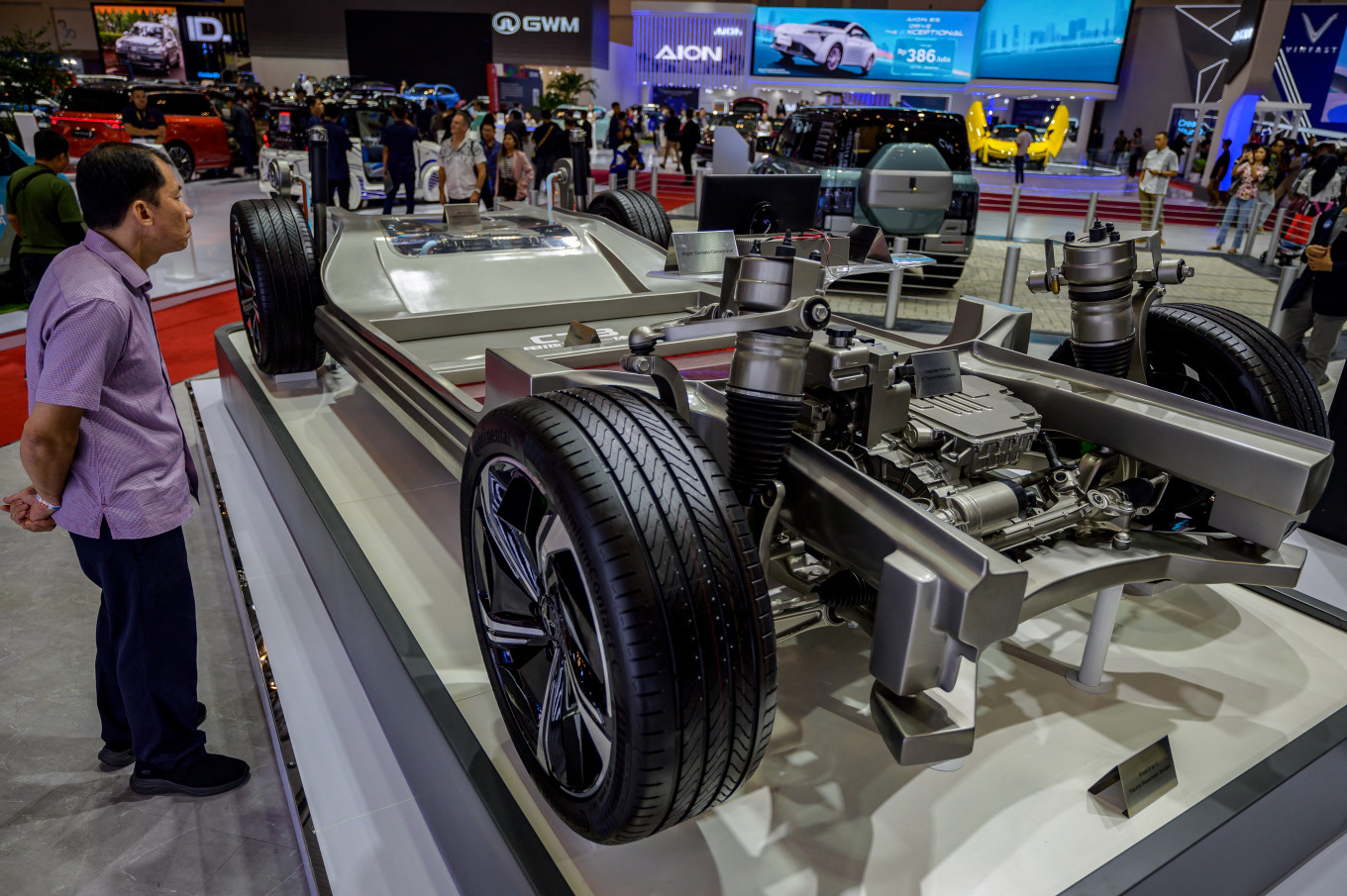
To prepare for the future, Indonesia could consider the example set by China, particularly in its electric vehicle (EV) development. As a latecomer, China understood that if it could not compete with existing leaders in internal combustion engine (ICE) vehicles, such as Japan, the United States and Europe.
China pursued its EV development through consistent, disciplined investment and policy support. The investments encompass technology and human resources. The technology covers the advancement of battery technology and the development of efficient energy management systems, which are integral to the functionality of EVs. Furthermore, China has obtained access to essential raw materials, including copper and nickel, through international collaboration, particularly in African and Southeast Asian countries, especially Indonesia.
In 2010, when the industry was ready to take off, the Chinese government began implementing subsidies to stimulate the growth of new energy vehicles, contributing to the exponential expansion of the EV market in the country. By developing the industry as well as the domestic market, China successfully established an ecosystem that supported the growth of the EV industry, thereby becoming a global market leader, overwhelming Europe and the US.
China’s success in its EV industry is inextricably linked to a meticulous and well-conceived strategy wherein the government assumes the role of orchestrator in the development of the essential technology and resources to secure a dominant position in the global EV market. By studying China’s approach to developing its EV industry, Indonesia can identify new industrial opportunities to focus on based on its comparative and competitive advantages.

Indonesia’s entrance into EV based on its comparative advantage of its nickel resources is commendable. Indonesia, the world’s largest producer of nickel, a key component of EV batteries, has been trying to play a role in the global supply chains of EVs by attracting investment into the battery industry and manufacturing of EVs. Investors from China and South Korea have been building EVs and nickel-based battery plants in Indonesia.
link